
BLUES JUNCTION Productions
7343 El Camino Real
Suite 327
Atascadero, CA 93422-4697
info
Crooning Blues
by Erwin Bosman

When I started exploring blues music about a year and a half ago, I was surprised to see that the interest in this musical genre is still very much alive. It is not part of the mainstream. The passive and active involvement however in this form is still thriving. I quickly realized that the way blues is viewed by many is heavily contaminated with romantic stereotypes about both the genre and its artists. Many of these distorted views have come from the way we have started to perceive it through the prism of rock & roll. The first blues revival that started in the very late 1950’s, and continued in the 60’s, helped create the idealized and romanticized image we have of this music and the people who make it. The image of the impoverished, hard working black man, playing his guitar on the front porch of his shack in the glow of the setting sun covered cotton fields is pervasive. Though much is still to be examined and the debate is still ongoing, it is already clear that the genesis and evolution of blues is much more complicated and interesting than this simplified image will have us believe. A prime example of this is Leroy Carr.
The name of Leroy Carr may today sound unfamiliar, but he is a key figure in the pre-war 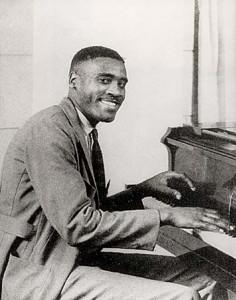 blues period. He was the complete opposite of men like Charley Patton or Robert Johnson. Unlike Patton or Johnson he was very popular in his time. His social background is also quite different from the classic delta blues artist, yet he is a ‘must’ when one wants to have a complete picture of the early pre-war blues period.
Even though Leroy Carr left school when he was about 15, he was well educated compared to most of his blues compatriots. The Nashville, Tennessee native was raised in an urban environment. As a teenager he taught himself to play the piano. Even though he was underage he would dress up in a suit and tie and play in adults only nightclubs. When his singer left him to try a career in sports, he started singing himself when playing the piano. He soon became very popular. This was at a time when, in the northern cities, vaudeville & female blues singers were making headlines.
Leroy Carr’s style was very smooth and soft, and this contributed to his wide spread appeal. His playing and crooning style of singing had a great influence on later singers like Nat King Cole, Charles Brown and Ray Charles. This particular blues style is the reason he was shunned decades later during the blues revival as his image did not correspond to the classic, clichéd image of the blues musician from the South.
Somewhere out on the bootleg circuit Leroy Carr met his musical equal in Scrapper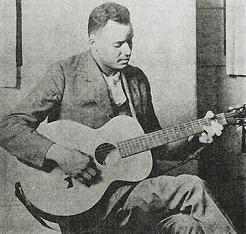 Blackwell. They had a short and intense career together. They complemented each other perfectly. Leroy Carr’s smooth piano style and wonderful laid back, urbane singing style melded perfectly with Blackwell, a magnificent guitarist who played in a melodic, jazzy style.
In 1928 the two recorded Carr’s tune How Long, How Long Blues. The song became an immediate smash hit, giving him enough royalties to support a family and to buy liquor.
After a few years however, Scrapper felt that he was living in the shadow of Leroy, and they split on unfriendly terms. By then, liquor had became a more steady and reliable friend than Scrapper. In 1935 kidney failure as a result of acute alcoholism ended a brilliant musical career much too soon.
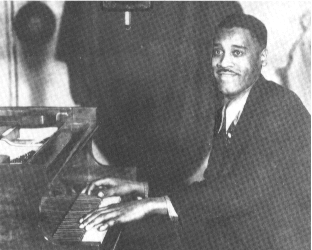 Leroy Carr left behind an impressive legacy. He is an exponent of the evolution of the country blues to the city blues, an evolution that would become more and more visible towards the end of the thirties and after World War II. Chicago and its electrified blues pushed the country blues to the background.
His mark on music still lives. T-Bone Walker, Charles Brown, Amos Milburn and Count Basie owe him a lot.
BLUES JUNCTION Productions
7343 El Camino Real
Suite 327
Atascadero, CA 93422-4697
info