BLUES JUNCTION Productions
7343 El Camino Real
Suite 327
Atascadero, CA 93422-4697
info
Joe’s Jukebox
Track 1
Born Under a Bad Sign by Albert King was released in 1967. After recording at Bobbin
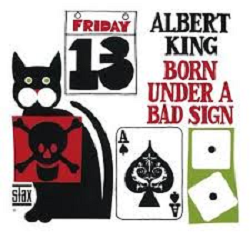 Records out of Saint Louis, the veteran guitarist hooked up with the Stax crew, their iconic house band, Booker T. and the M.G.s as well as Isaac Hayes and the rest as they say is history. Born Under a Bad Sign became a career defining moment for King and modern blues music. The three piece horn section on the album’s liner notes refers to players as the Memphis Horns. They are trumpeter Wayne Jackson, tenor sax men Andrew Love and Joe Arnold. The iconic title track was covered by the British rock group, Cream within of few months of this release and then subsequently by every bar band on the planet it seems, but the original is still by far and away the best.
Track 2
Eddie Floyd originally joined Stax Records in 1965 around the same time Joe Arnold
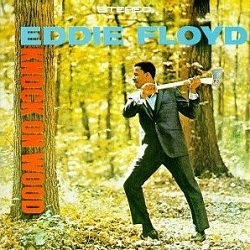 started doing sessions there. He started out as a songwriter. In 1966 he co-wrote a song with Steve Cropper and recorded the track that was originally intended to be recorded by Otis Redding. Floyd released the tune however. That song, Knock on Wood was a smash hit single and features the now famous bridge with a classic Stax horn arrangement. In time, this tune would be covered by hundreds of artists on record and thousands more in performance. This version is the title track to Floyd’s debut album in 1967.
Track 3
Hold on I’m Coming by Sam and Dave represents their first huge smash hit. The tune
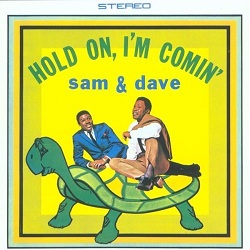 was written by the new songwriting team of Isaac Hayes and David Porter. The singers known as Double Dynamite, Sam Moore and Dave Prater had recorded a few sides at Stax by then, but few took notice. Although Hayes and Porter had a hand in developing the careers of many Stax artists and performers, none were so profoundly influenced by their songwriting and tutelage than Sam and Dave. Their debut album was released in 1966. The title track with its pile driving horns remains one of the most popular pieces of music recorded at the Stax studio (for Atlantic).
Track 4
Otis Redding was the brightest star the Volt label, a subsidiary of Stax, ever produced. His fifth, and
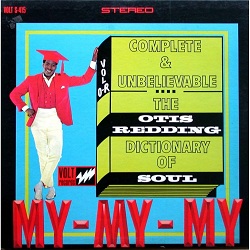 what turned out to be his last, solo studio album released in his lifetime was called, Complete and Unbelievable: The Otis Redding Dictionary of Soul. Joe Arnold would go into the studio again the following year with Redding, along with Carla Thomas, to record their duet LP entitled The King and Queen that included their reading of the Jimmy McCracklin /Lowell Fulson tune, Tramp. Arnold would then travel to Europe with Redding and the group of musicians in the Stax/Volt European Tour. Many of the songs from those shows originally showed up on Complete and Unbelievable...including, Fa- Fa- Fa-Fa-Fa (Sad Song).
 Track 5
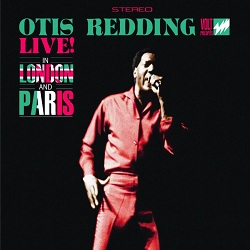 There are a few albums and singles that have been released from the historic, Hit the Road Stax 1967 European tour. All of these releases feature a three piece horn section called, the Mar-Keys. These are the same three players who were also at times billed as the Memphis Horns. This gets even more convoluted as there was a group made up of all white musicians who had an early Stax hit with an instrumental called, Last Night. Trumpeter Wayne Jackson appears on that record, although Joe Arnold and Andrew Love do not. However there is a terrific live version of that song on an album that was recorded on this tour, entitled Booker T. and the M.G.s and the Mar-Keys/Back To Back. On that version, Joe Arnold takes the tenor sax solo. In 2008, the Concord Music group who is now the parent company of Stax, re-issued material from two Otis Redding concerts from this tour, Otis Redding Live in London and Paris. Redding was the concert headliner. His show stopper was, Try a Little Tenderness that features the Mar-Keys.
Track 6
After Joe Arnold left Stax, he recorded for several labels in a variety of musical
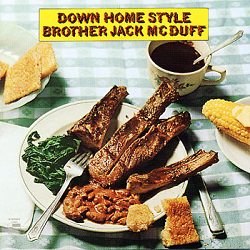 situations. Down Home Style is a blue note album by Hammond B3 wizard Brother Jack McDuff. Recorded on June 10, 1969, this record combines jazz with a healthy dose of Southern fried funk. Joe Arnold plays tenor on this album and recruited fellow Memphis players including guitarist Charlie Freeman to add some Southern spices to the proceedings. Arnold takes a wonderful tenor solo on the Hoagy Carmichael tune, Memphis in June. The album lists Joe’s name as “Jay” Arnold. In retrospect, this is no big deal as there are numerous recordings that he and others presumably participated in with no mention of their names at all. There are numerous errors and inconsistencies in the All Music Guide and Wikipedia as it relates to Arnold’s recordings. Blue Note was always very consistent with their liner notes and even they goofed on this one.
 Track 7
During the time that Joe Arnold was making records for various labels in Memphis,
 including the album on the aforementioned Blue Note, as well as Scepter Wand (Joe Arnold), Columbia (Bill Black’s Combo) and various artists at Hi Records, he was also commuting to Muscle Shoals, Alabama. The first recording he did at Rick Hall’s Fame studio in that southern music Mecca was for the Clarence Carter song, Slip Away. Arnold went on to play his sax on every single that Carter made through 1970. In 2012, Kent Records, a reissue label out of the UK, released an album Clarence Carter: The Fame Singles Volume 1/1966-1970. This record is a twenty four track soul shot of material originally released on both the Atlantic label and on Fame Records. The song Slip Away which was released in 1968 turned out to be a breakout single for the Alabama native.
Track 8
Another Alabama native and Atlantic Records recording star, Wilson Pickett had, like
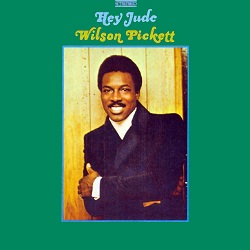 Joe Arnold, also made records at the Stax studios in Memphis before heading to the Fame Studios in Muscle Shoals. Pickett’s 1968 album, Hey Jude, like other recordings from this period, features Fame’s famous house band affectionately known as the Swampers. This record also features the newest member of the team Duane Allman. It is his slide guitar heard throughout the title track, which is our jukebox selection, as well as the rest of this fine album. These are the first recordings that Joe Arnold did with Allman. They would work together on countless sessions over the next two years or so.
Track 9
Otis Rush’s Mourning in the Morning on Atlantic subsidiary, Cotillion Records, was a
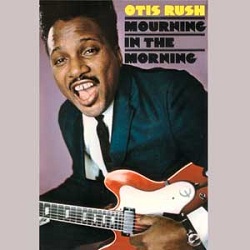 1969 release. It is his first album. He, of course, had been cutting singles for over fourteen years as mentioned by the album’s co-producer Nick Gravinitis. Rush cut sides for Cobra and Chess Records out of Chicago and did a couple of sessions in Houston for the Peacock label. This album originally received a somewhat lukewarm response from critics. I think it is due to the fact that it is a slight departure from what people had heard from Rush up to this point in his career. I, on the other hand, love the Muscle Shoals funk and soulful horn arrangements that create a magnificent platform for Rush’s wonderful singing and guitar playing. The sound is reminiscent of what Albert King had been doing at Stax which was universally embraced. The highlight on this record just might be the minor key, slow blues entitled, Reap What You Sow. The song written by Gravinitis, Paul Butterfield and the album’s other co-producer Mike Bloomfield finds Otis Rush swapping licks with Duane Allman’s slide and Joe Arnold’s tenor.
Track 10
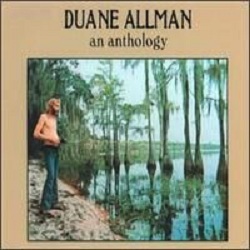 Our final jukebox selection is undoubtedly a jukebox favorite everywhere as the tune clocks in at thirteen minutes and one second. Who doesn’t want to get their money’s worth and hog the jukebox before some a*hole puts in a dollar and plays some power ballad by White Snake. The Boz Scaggs’ tune Loan Me a Dime written by Fenton Robinson, which features the guitar of Duane Allman and the tenor sax of Joe Arnold, along with his buddies Floyd Newman on baritone sax and the great Gene Bowlegs Miller on trumpet, has been a favorite of FM DJs for decades for the same reason, it’s LONG. It’s also a damn good tune. The length of this song can allow the jock to go to the bathroom, eat a sandwich, call his girlfriend, put some records back in their sleeves and still have time to roll a joint and smoke it. This came from a 1969 album simply entitled, Boz Scaggs. It didn’t chart on its initial release but was reissued in 1974 and did a little better the next time out of the box. Like most of the songs in our Jukebox, this selection can be found on a variety of compilations. For the selections up to this point I went with the original albums but for this tune I thought the best place to go is The Duane Allman Anthology Volume 1 as it is a heck of a lot better than the Boz Scaggs album from which this tune originally appears.
 Bonus Track
Here's a bonus track - Booker T & the M.Gs and the Mar-keys
featuring a solo by Joe Arnold
"Last Night" - Stax Tour, EuropeClick here to view thousands of Blues titles

BLUES JUNCTION Productions
7343 El Camino Real
Suite 327
Atascadero, CA 93422-4697
info